2025 ACE-WIL Student of the Year Award | University Co-op Student
Award Winners, Student of the Year |The Association for Co-operative Education and Work-Integrated Learning BC / Yukon is pleased to announce the recipients of the Co-op/WIL Student of the Year Awards. These awards recognize BC or Yukon students who demonstrate an outstanding level of achievement in their co-operative education or work-integrated learning experience; combined with a strong academic record, volunteer activities, and significant contributions to promoting co-operative education in their school and in the community.
University Co-op Student: K’sana Wood Lynes-Ford
University of Victoria
About K’sana Wood Lynes-Ford
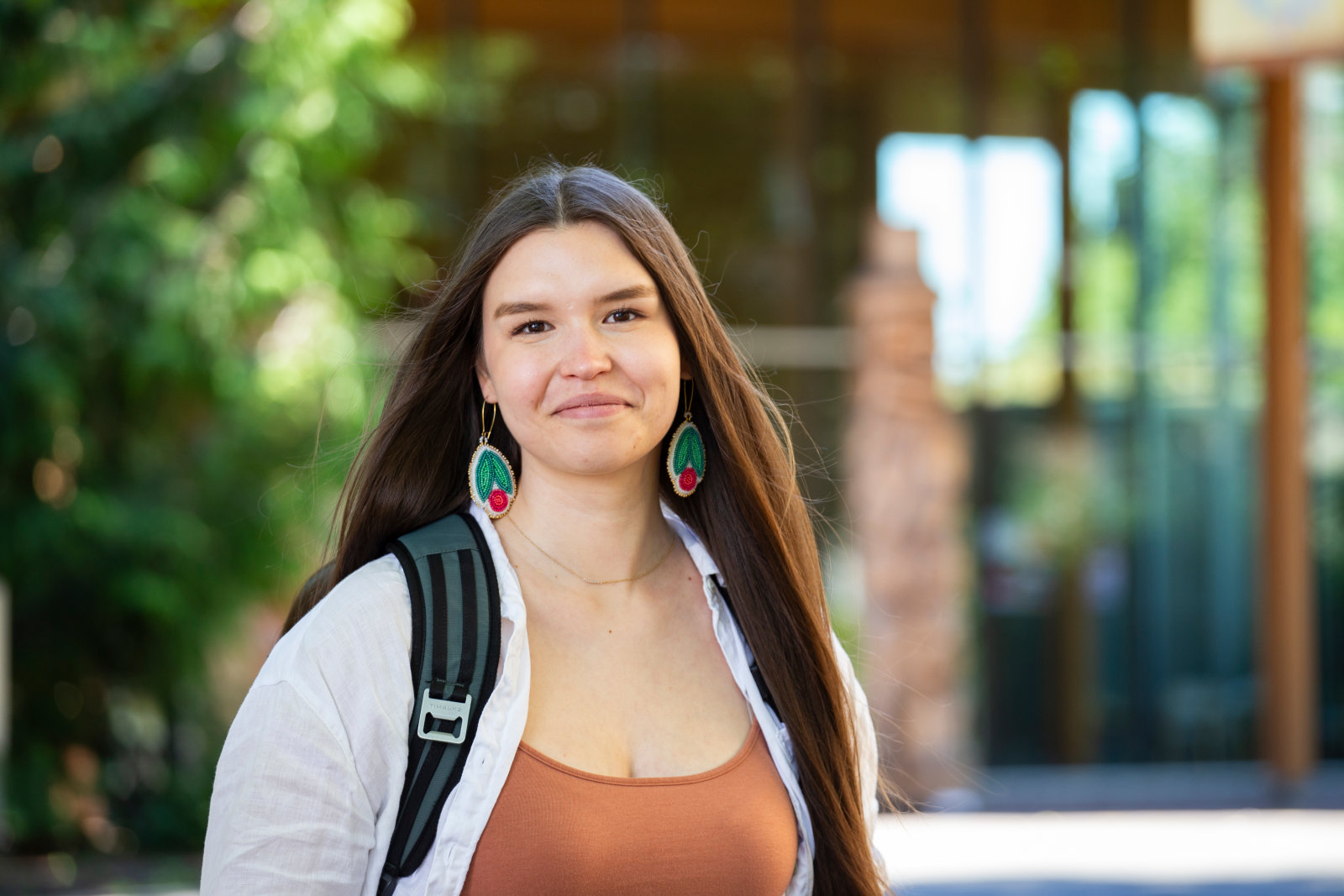
K’sana Wood Lynes-Ford is a fourth-year Indigenous student at the University of Victoria. She is in the Chemistry for Medical Sciences Program. K’sana is from the ’Kwakwakaʼwakw (‘Na̱mg̱is), Gitxsan (Gitanyow), and Tsimshian (Gitxaała) First Nations. Her name, K’sana, comes from the Skeena River, known as the ’Ksan River, which runs through the heart of Gitxsan traditional territory, and her name loosely translates to “Woman of the River.”
K’sana is an active member of her community. She has served on the Native Students Union Council for two years, as Stewardship Councillor and now as Firekeeper. K’sana has also been a peer mentor to other Indigenous students through the Campus Cousin Program. She recently joined a Northwest Coast dance group called Git Hayetsk. In her free time, K’sana loves to cook and bake. She is also an avid reader.
Quote from K’sana Wood Lynes-Ford
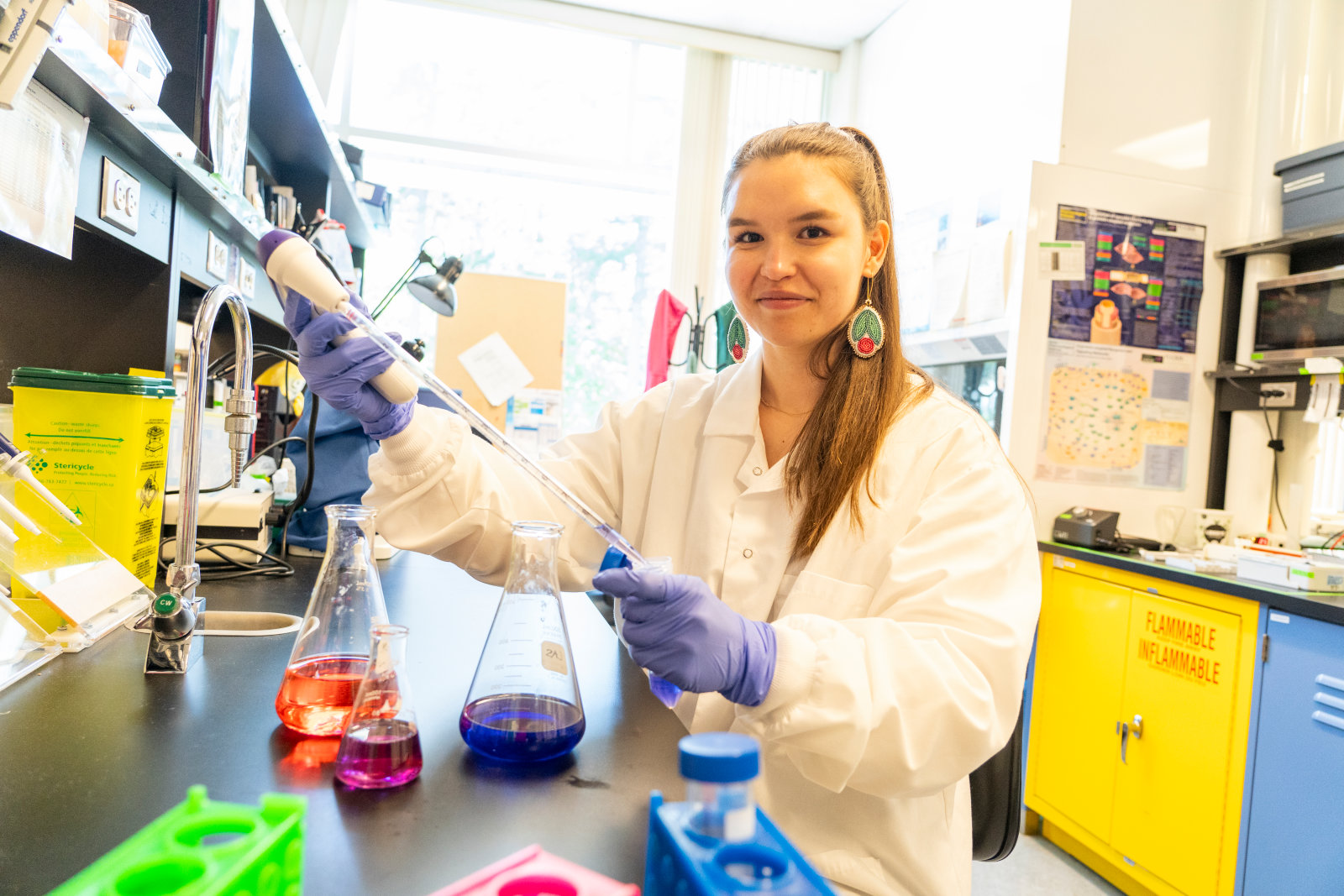
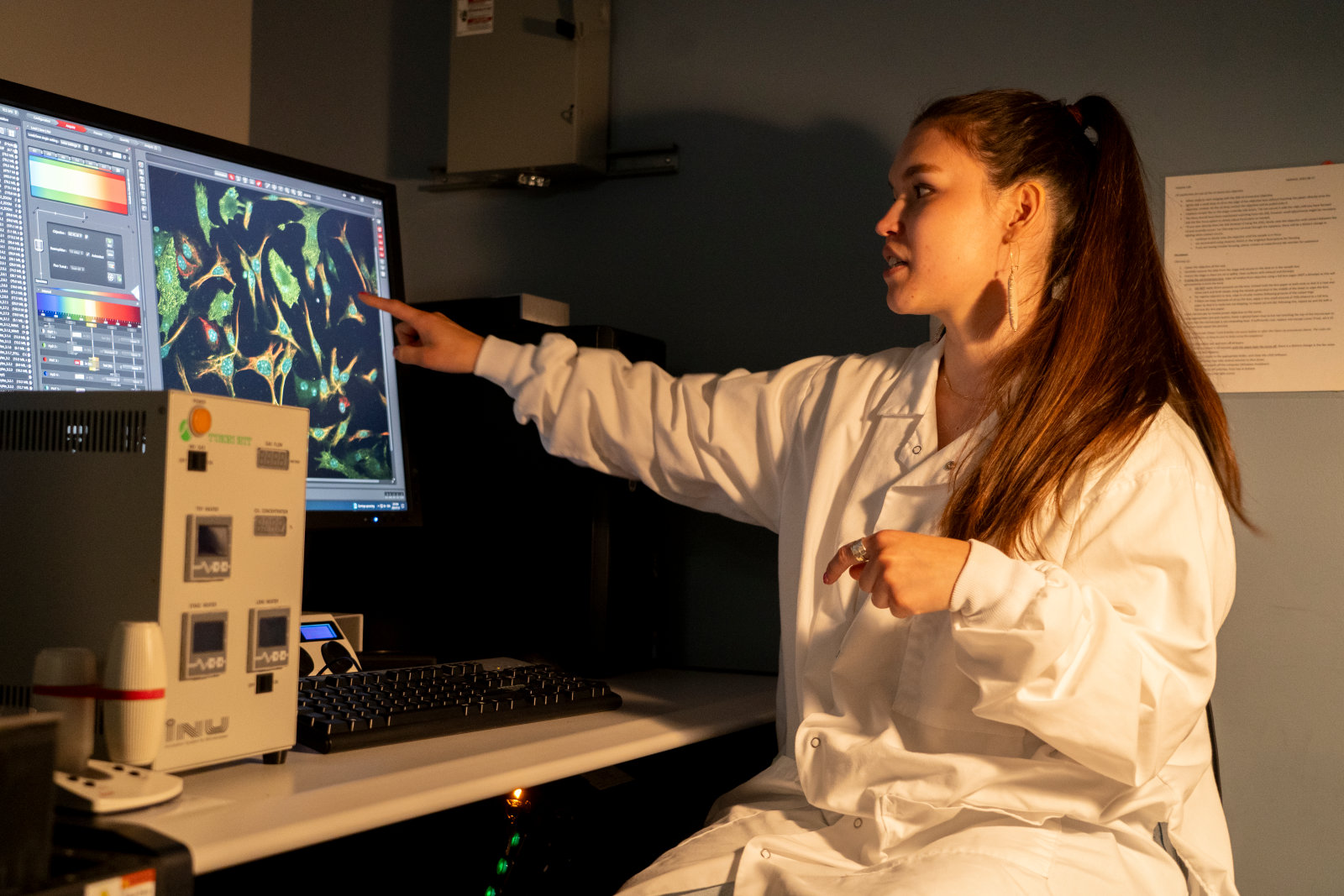
“During her co-op, K’sana worked with Dr. Laura Arbour and Dr. Leigh Anne Swayne, who study genetic variants and their impact on the health of the Gitxsan People. Genetic variants such as KCNQ1 p.V205M, ANK2 p.S646F, and CPT1A p.P479L are found in the Gitxsan First Nation and have been linked to many health concerns, including heart and brain issues such as arrhythmias, fainting, seizures, and potentially brain aneurysms. This project’s subject matter directly affects K’sana’s family members and loved ones. During her co-op, her project contributed to understanding the health issues affecting her community.”